Project Management Plan Template
Whether it’s software development, large marketing campaigns, or small interior design renovations, project management is essential for delivering a great product on time, especially when multiple projects are being developed simultaneously. However, no matter how hard a manager tries, or how consistent the team is in maintaining communication and staying aligned, there might be instances where something gets missed or overlooked.
Project management templates come to the rescue by helping teams start their projects on a solid foundation, execute them effectively, and finish them on time. These templates may seem like a lot for a single document, but when tailored to the project’s specifications, with the team’s abilities and expertise in mind, they become powerful tools for reaching success.
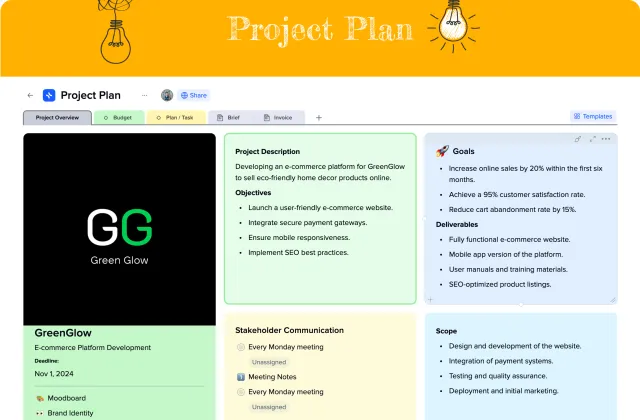
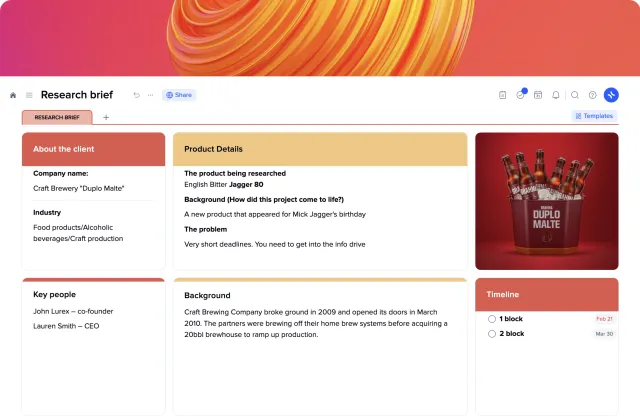
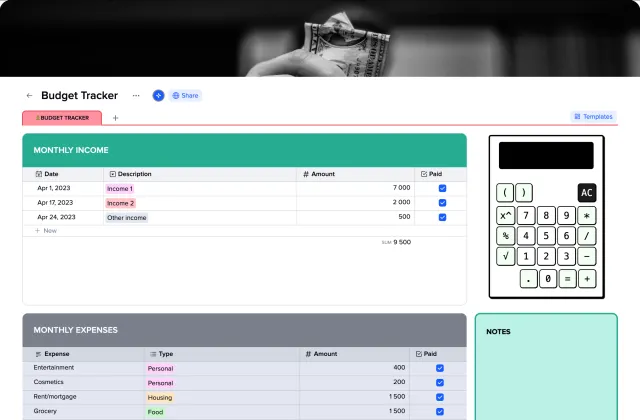
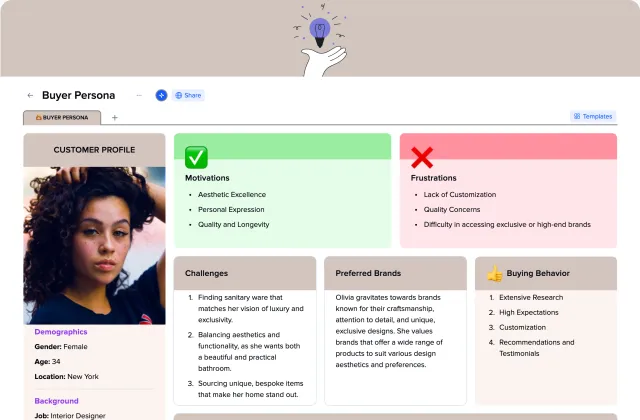
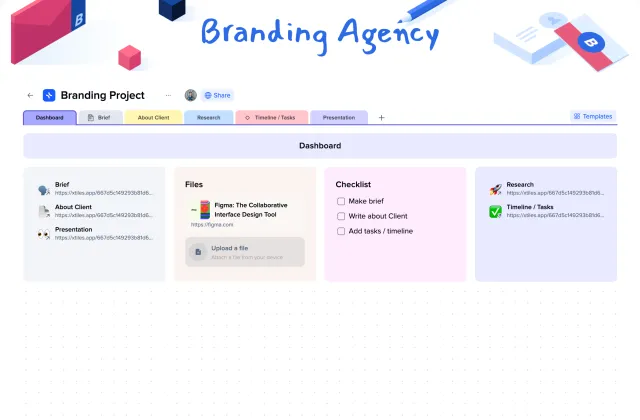
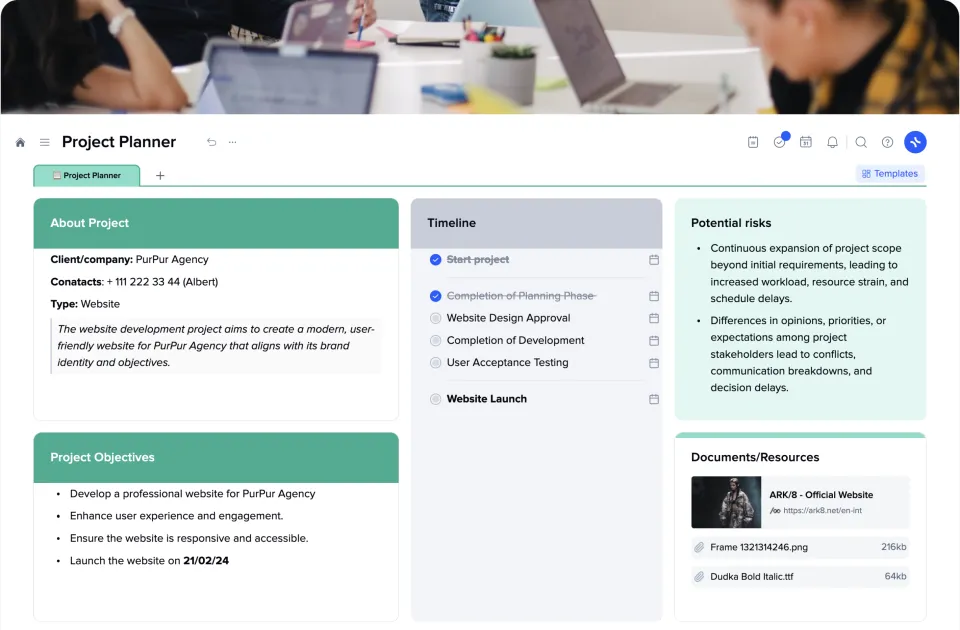
The xTiles Project Management Plan Template is a ready-to-use framework that provides a blueprint for your project, regardless of its specifications or the industry you’re in.
A project management plan is a formal and approved document created by a project manager, incorporating inputs from the project team and key stakeholders. Its purpose is to define how the project will be executed, monitored, and controlled.
The plan can take the form of either a concise overview or a detailed document, encompassing baselines, subsidiary management plans, and other relevant planning materials. Its primary objective is to guide the project team in achieving the project’s intended scope within the defined parameters.
Throughout the project’s execution, performance is measured against the performance measurement baseline outlined in the project management plan. Any deviations from these baselines are promptly addressed by the project manager, who makes necessary adjustments to correct the course. If these adjustments prove ineffective in rectifying the deviations, formal change requests to the baselines are initiated.
The project manager invests significant effort in ensuring that the baselines are attained, ensuring that the project sponsor and the organization can fully benefit from the project. Beyond proficient planning skills, a successful project manager excels in effectively controlling the project’s progress, ensuring the timely delivery of project deliverables, and adhering to the provisions outlined in the Project Management Plan.
Why Use a Project Management Plan?
A project management plan helps teams gain a comprehensive understanding of the project and guides its successful execution. Successful projects require attention to many aspects, such as manpower, resources, risk management, communication, and talent. A plan aligns all these factors, ensuring smooth execution. Here are the essential reasons why incorporating project management plans is crucial for successful projects and teams:
- A project management plan provides a clear and comprehensive outline of the project’s goals, timelines, and benefits, ensuring all stakeholders are fully engaged and supportive of the project’s objectives.
- It helps identify the specific tasks and activities required to complete the project successfully.
- It helps determine the right expertise and skills needed to develop the project, maximizing the chances of accomplishing project goals efficiently and effectively.
- It enables meticulous evaluation of potential risks that may arise throughout the project’s execution.
- It ensures effective communication within the team, critical for project success.
- It helps set clear and achievable goals and milestones.
- It ensures efficient management of financial resources, raw materials, manpower, and other assets.
How to create a project plan using the xTiles Project Management Plan Template?
A project plan may be for different kinds of projects. Whether you’re looking for project management in healthcare, project management marketing, or project management for freelancers, you may go for a pre-designed template to save time.
Utilizing the xTiles Project Management Template and a detailed step-by-step guide ensures you create a comprehensive plan highly useful for the team, stakeholders, and everyone involved.
Step 1: Prepare for Planning
Some think that planning is the first stage of any project. However, in order to be effective, planning needs to have an envisioned base. In other words, a project manager needs to discuss with the client and the team all the aspects of the project.
- Gather the information:
Gather together all the information you already have about the upcoming project. This section is very important because it helps to identify from the first glance your current project. Later, when you have more information, add everything that may be necessary.
Also, don’t forget to record your resources and everything you need for successful project development. Put together links and files that you and the team need for inspiration, your competitors and what you like about their projects, and any kind of files and notes to ensure people involved understand where to move.
Even before diving into a detailed brainstorming session, take the necessary steps to envision your plan.
- Try to understand the problem and envision it from different angles:
Take the time to understand the problem you’re aiming to solve with your project. Analyze its various aspects and implications to gain a comprehensive perspective. However, remember that it’s always better to focus on one specific problem than trying to save the world with your project.
- Generate diverse ideas:
However, during the brainstorming session, encourage the generation of a wide range of ideas. Don’t restrain people’s imagination and accept even the wildest ideas. You and the team will consider them later to choose what will work best, what may work, and what probably won’t work in any circumstance.
Encourage your team to think outside the box and aim high. Embracing bold ideas can spark innovation and lead to breakthrough solutions. Remember, it’s easier to scale back a daring concept than to transform a safe idea into something extraordinary.
Also, during brainstorming sessions, it’s always good to explore different approaches and solutions as they can address various scenarios related to the problem from different perspectives and help the team generate more ideas.
You may make your meeting notes in the xTiles Project Management Plan Template to have everything at hand at any stage of your project.
- Discuss and vote:
After every idea is carefully written down, allocate time for team discussions to evaluate and assess the proposed solutions. You may take a break for a couple of days, so everyone can think of these ideas and decide how they feel about them. Usually, straight after the brainstorming sessions, people’s minds might be overwhelmed with the amount of what they heard and saw.
It’s important to encourage open dialogue within the team and everyone involved in the brainstorming and allow team members to voice their opinions and insights.
Try not to accentuate who came up with certain ideas during the discussion to avoid confusion and disagreement. You may use a voting system to prioritize ideas and determine which ones should be explored further in a democratic way so that everyone feels responsible and involved, even if the chosen idea isn’t theirs.
- Visualize and align:
Create visual representations of the chosen ideas to enhance understanding and alignment within the team and everyone involved. Make sure everyone understands the idea.
The visualization may include diagrams, charts, sketches, or any other type of content to depict the proposed solutions and their potential impact in the most representative way.
When working on this part of the project, imagine that you need to explain your idea to someone who hasn’t attended your brainstorming session. That’s why it has to be clear, eliminating the possibility of misunderstanding.
Step 2: Plan and Prioritize
Once you have the idea or ideas for the project and you have gathered early feedback, the time to prioritize and plan your project effectively starts.
- Incorporate feedback:
Take into account the feedback received from early testing, discussions, or stakeholders. Every thought is important, and sometimes it’s better to spend extra time getting feedback than rush into action and then realize that something was wrong from the beginning.
Analyze all the feedback you managed to get carefully, considering the success metrics and objectives of your project. Use this information to prioritize what features, tasks, or components should be included in the project.
- Establish priorities and build a roadmap:
Now it’s time to prioritize your tasks to allocate resources and focus on the most critical aspects of the project. You may use the Time Matrix to ensure nothing distracts you and the team from the important tasks.
Benefits of Upgrading your xTiles Plan
- Access to advanced templates that make your planning, managing, tracking, and collecting a stunning visual experience.
- Unlimited personal spaces and pages to create and execute all of your projects, even the bravest ones.
- Unlimited spaces to share to work on group projects or manage teams.
- Recurring tasks to automate the planning process.
- Unlimited storage to save all of your information in one place.
- Google Calendar integration to manage your schedule from one place.
- Advanced color customization to enhance organization through custom palettes—because the visual aspect matters.
- A timeline view to visualize your projects and their approximate duration.
- Forms to gather data from anyone and save it to your collections.
- Linked pages to synchronize the information across multiple projects in real time.
- Priority support to get your answers anytime you need.