Shopping List Template
Do you use shopping lists to minimize the time you spend in stores? Or do you prefer to rely on your memory?
The second approach may ruin your budget and habits in the long run, not to mention that you waste much more time strolling between shelves.
If you think that creating a list every time you plan to visit a store is not for you because you don’t normally waste your time creating documents or you will lose that piece of paper anyway, a shopping list template is your solution.
If every visit to any store is a torment for you, and you just grab the first things you see to run away as soon as possible, you may try shopping lists too.
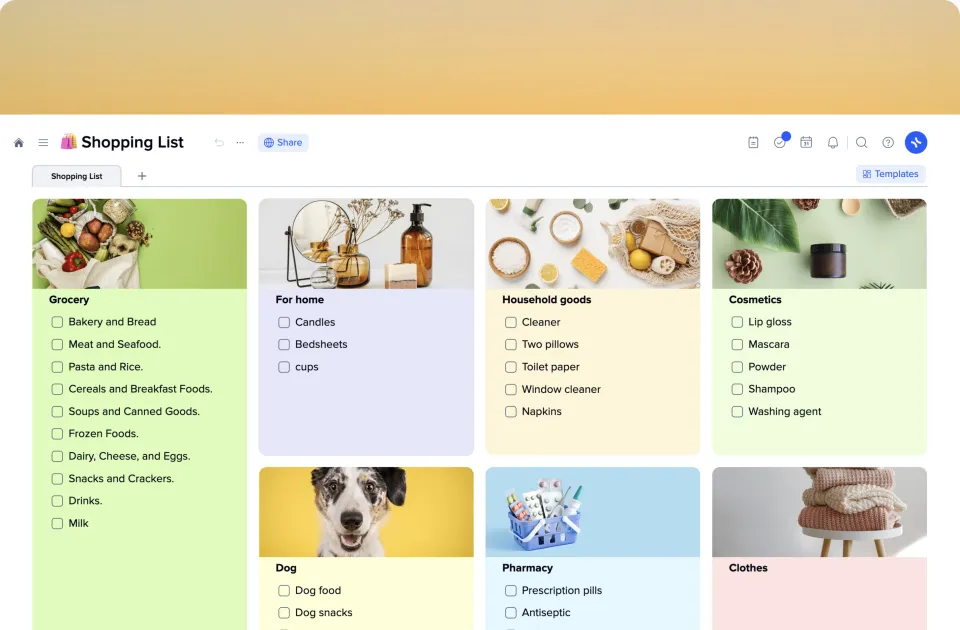
The xTiles shopping list template is a ready-to-use framework where you put names of needed items. Additionally, you get them sorted depending on their kind. No long walks in supermarkets from one shelf to another, only to return to the first one.
Except for the template, we offer you a guide on how to get maximum benefit from your shopping list, turn your shopping into a much nicer and less chaotic process, and save time and money.
A shopping list is a record, either written down or stored electronically, that itemizes the products an individual intends to purchase during their shopping trip. It acts as a prompt and a reference to guarantee the acquisition of all required items.
A shopping list may cover a range of categories, such as groceries, household goods, personal care items, apparel, or any other desired purchases. Also, you may create separate lists for any of these categories.
Creating a shopping list helps people maintain order, save time, and prevent the omission of necessary items. It enables people to pre-plan their shopping and ensures they procure everything necessary while avoiding unnecessary or impulsive buying. Depending on personal preference, shopping lists can be crafted using pen and paper, smartphone applications, or various online platforms.
Shopping lists may be regular or may be created for special occasions. In the first case, a person creates, reviews and updates their shopping list as a week goes.
In the second case, a person normally doesn’t need a list of items to buy because it’s a repetitive action, so they know what has to be in their trolley and what has to stay away. However, starting a new diet, they need a “guide” to help them buy the necessary items. A keto shopping list or a Mediterranean diet shopping list is quite popular.
Celebrating or moving are other special occasions when people may use shopping lists as a supportive tool. For example, they may create a college shopping list or a Thanksgiving shopping list.
Ultimately, even if you don’t use shopping lists on a regular basis, they will come in handy when the habitual tide of life goes awry for different reasons. In this case, a shopping list template is especially useful because it requires zero previous experience and minimum preparation.
When it comes to crafting a shopping list, people have a variety of options, including applications, online platforms with list-making features, traditional paper-based lists, Google shopping list, etc. Let’s compare all of them.
- Paper Shopping Lists:
This category offers a traditional and tangible approach to list-making. Lists created on paper are easy to write and customize, yet they also easily become messy due to too much customization.
With a paper list, you can physically carry it to the store, making it accessible even without a digital device. However, paper lists require manual updating and rewriting for each shopping trip, which is time-consuming.
Additionally, they are susceptible to being lost or damaged if not properly kept or misplaced.
- Smartphone apps:
Smartphone apps offer a convenient and portable solution for creating lists.
These apps have various helpful features, including the ability to categorize items, set reminders, and synchronize your lists across multiple devices, ensuring that your list is always at hand. You can’t lose or forget such a list since it’s always on you.
Usually, these apps allow attaching pictures, including notes, and specifying quantities, to make your list more detailed and comprehensive.
- Online Platforms with List-Making Features:
This option offers the convenience of accessing your shopping list from various devices. The only requirement is to have an internet connection.
These platforms often provide a user-friendly interface where you can easily create and organize your list.
They may offer additional features such as sharing lists with family members or friends, creating multiple lists for different purposes, and even syncing with online grocery delivery services. Online platforms ensure your list is readily available whenever and wherever you need it.
- Google Shopping List:
Google Shopping List is a specific list-making feature offered by Google. It allows adding items using voice commands or manual input. It also allows for collaboration, enabling multiple users to contribute to the list simultaneously. Integration with Google Assistant further enhances convenience, as you can manage your list hands-free using voice commands.
- xTiles
xTiles combines all of these options. The templates you receive are easy to customize, yet they are thoughtfully designed, with a well-structured layout that can be used without any modifications. The synergy between the desktop and mobile versions enables quick and easy access to your lists, allowing you to jot down your thoughts on future shopping while on the go
What makes a shopping list effective?
An effective shopping list has several characteristics contributing to its usefulness and functionality. Since its main function is to help you do shopping, we can define the next key factors that make it effective:
- Comprehensive
A really good shopping list includes all the necessary items you need to buy. It covers all the standard categories of items people usually purchase, including groceries, household items, personal care products, and any other specific items people require.
- Specific
A good shopping list doesn’t make it harder. All the items are defined and specific so that when you’re in the store, you don’t have to stay there and contemplate, for example, what vegetables you exactly need or do you want dark or milk chocolate.
That is particularly important when you make a shopping list for someone else. While you can understand what you meant, someone else might be overwhelmed by the ambiguity of your list.
- Organized
A good shopping list has a structure. It’s not a stream of consciousness unless you’re a contemporary writer and your lists are part of your texts. The best approach is to categorize the needed items depending on their location in the store or their nature. For example, dairy products are with dairy products; veggies are with veggies, and so on. That will help you navigate through the store more effectively and consequently.
- Prioritized
When a shopping list is long, and you’re pressured by time, you may prioritize the needed items by their importance or urgency. That will help you ensure that essential items are purchased in any case. And if you have enough time or when you have it again, you can buy other items on your list.
- Updated
Unfortunately, you can’t use one shopping list for years. It has to be regularly reviewed and updated. Remove items you have already purchased and add new items as needed. Also, remove items you didn’t like the last time and add new ones to keep your diet balanced.
- Portable
Make sure your shopping list is on you or it is easily accessible. A digital solution such as a smartphone app or a note-taking tool that you can access on the go offers more convenience and easy editing options.
- Personalized
A good shopping list is really yours. It reflects your lifestyle, not someone else’s. Tailor it to your dietary requirements, household size, and any specific items you need. That will help you ensure that your shopping list covers all of your needs.
These elements may enhance your shopping list effectiveness and make your shopping experience more efficient and organized.
After years of the shopping experience, many of us have developed our own routines and rituals. Some of us prefer to buy everything needed for a week and forget about stores till next time. Some of us go there every time after work. Some of us make a quick ride, and some prefer to check everything slowly, etc.
The ever-expanding range of brands and choices can easily overwhelm us.
The abundance of choices can be daunting and leave us feeling scattered while offering improvements over our everyday purchases at the same time. That often results in returning home with the wrong items or even empty-handed. The surplus of options might lead to overthinking, causing decision paralysis. Conversely, it might also be distracting, leading to overspending and exceeding our budget.
This is where a grocery list comes to the rescue, ensuring efficient shopping without the need to make U-turns for forgotten milk or other essentials. Create a grocery list every time you need to visit the store or keep a standard list for a week, regularly updating it when you require specific items.
There’s nothing worse than returning home just to realize that you bought soy milk instead of almond milk, forgot the eggs, or purchased more bananas when you already have a ripe bunch in the back of your fridge.
An organized shopping list ensures you’ll never find yourself halfway through a recipe, only to discover that you’re missing essential ingredients.
How to create an effective shopping list using the xTiles Shopping List Template?
Creating a shopping list is harder than just putting all the items on paper or into an app. If you want it to be helpful, you need to consider a few aspects which will turn a regular list into a powerful tool for maintaining your household.
Let’s create a workable shopping list on the example of a grocery shopping list.
- Assess your current stocks:
While it may seem like common sense, it is crucial to be aware of what you already have on hand. This knowledge allows you to accurately identify what you require so that you won’t end up with, let’s say, too much meat and no vegetables or vice versa.
Begin by opening your pantry, refrigerator, and freezer, and taking inventory of their contents. This compilation serves as your comprehensive list. If you possess multiple storage areas in your home, such as a mini-fridge in the basement, be sure to assess those as well.
Additionally, take note of the expiration dates for each item. For instance, even if you have a full jug of milk, it becomes necessary to restock if it expires tomorrow.
- Organize your priorities through categorized lists:
Begin by examining available items or the previous list, even if it was on a scrap of paper or in saved messages on your favorite messenger. Identify items that are running low and those that you have in abundance. Then, create a separate list of items you currently do not possess.
To effectively prioritize these items for replenishment, you may establish three distinct running lists. You may label them depending on your preferences. Just choose labels you like or ones that are easy to identify at first glance. When one item starts running low, put it into the category “need to restock.” These priority lists will help you keep your stocks always full.
Creating separate lists will provide you with the utmost organization. However, if you prefer maintaining only a single list for immediate purchases, that approach works as well. Nevertheless, having a couple of lists – rather than just one list – accessible during your store visit can prove advantageous, especially if you come across a great deal on items you have enough at home.
- Opt for a categorization approach:
To enhance your system, consider implementing a categorization system that goes beyond the basic lists and covers your dietary needs, food preferences, household needs, loved ones’ needs, etc.
For example, when the grocery part of your list organization is based on food groups, it provides the benefits of tracking nutrition, increasing awareness of food group consumption, and potentially encouraging a more balanced diet. It is particularly helpful for individuals with allergies or dietary restrictions.
If your primary focus is efficient shopping and saving time in the store, categorizing your list according to the store layout is recommended. However, keep in mind that this approach works best if you primarily shop at a single store. Keep your go-to store in mind when organizing your list based on the store’s layout.
Adopting a shopping categorization system may add an extra level of organization and efficiency to your shopping routine, aligning it with your specific needs and priorities.
- Make additional lists based on specific needs:
In addition to the priority lists, you may create further lists to address specific requirements. For instance, items for special occasions are worth being included in an independent list.
Suppose you are planning for this week’s meal preparation. In that case, creating a dedicated list is beneficial, considering the need for careful planning. Furthermore, when you intend to follow a new recipe, check if there are any additional or rare ingredients you rarely have at home required and incorporate them into your list.
Suppose you have plans for a romantic and luxurious date night with your significant other. In that case, crafting another list specifically for gourmet shopping or when you go all out to create special meals from scratch is advisable.
These lists will naturally differ significantly from the everyday essentials you purchase weekly.
By creating these additional lists, you can cater to unique occasions, specialized cooking preferences, and specific recipes, ensuring you have a comprehensive and well-organized approach to your shopping endeavors.
- Allow flexibility and space for unplanned changes in your planning:
Once you have your lists in order, leaving some room for flexibility, especially regarding sales, is essential. If you have items on your list that will be on sale soon, consider whether it’s possible to postpone their purchase till later.
However, it’s crucial not to let these discounts and deals dictate your entire shopping trip, particularly when it comes to the red-labeled items on your priority list. Stick to your list and try to avoid getting too easily distracted, as it can undermine the purpose and effectiveness of your carefully curated lists.
- Track your progress while shopping:
Crossing items off your list as you go provides a sense of accomplishment and helps you stay organized and focused. Remember to mark items off your list as you place them in your shopping cart to avoid unintentional duplicates. You can use check marks or a color coding system to indicate completed items.
When navigating the store, prioritize nonperishable items such as canned foods and chips. For example, buying ice cream when you enter the store may feel rewarding, but it might not make it until you come to the checkout counter.
By following this sequence, you can maintain the quality and condition of your items throughout your shopping trip.
- Regularly review and update your lists:
After creating your lists and completing your weekly shopping, it’s important to check in weekly. Evaluate your inventory and adjust items depending on their priority.
Benefits of Upgrading your xTiles Plan
- Access to advanced templates that make your planning, managing, tracking, and collecting a stunning visual experience.
- Unlimited personal spaces and pages to create and execute all of your projects, even the bravest ones.
- Unlimited spaces to share to work on group projects or manage teams.
- Recurring tasks to automate the planning process.
- Unlimited storage to save all of your information in one place.
- Google Calendar integration to manage your schedule from one place.
- Advanced color customization to enhance organization through custom palettes—because the visual aspect matters.
- A timeline view to visualize your projects and their approximate duration.
- Forms to gather data from anyone and save it to your collections.
- Linked pages to synchronize the information across multiple projects in real time.
- Priority support to get your answers anytime you need.